

Sarah is a project manager who experienced burnout after years of working long hours, taking on too much responsibility, and rarely allowing herself to rest. When she returned to work, she noticed that even ordinary deadlines made her anxious, and she no longer felt comfortable pushing herself as she once had. This experience affected her confidence, causing her to question whether she was still capable of handling responsibilities that had once felt manageable. She needs a clear strategy to have a smooth start after burnout.
Burnout is a serious condition. Your body can become physically and emotionally depleted, your energy reserves may be significantly reduced, and both your mind and nervous system may need considerable time to recover and feel safe functioning at their usual pace again.
Burnout can affect the body, emotions, thinking, behaviour, and a person’s relationship with work. Common symptoms include persistent exhaustion, sleep problems, headaches, muscle tension, irritability, emotional numbness, anxiety, difficulty concentrating, forgetfulness, reduced motivation, and feeling overwhelmed by ordinary responsibilities. People may also become detached from work, lose confidence in their abilities, procrastinate, withdraw socially, or require much more time to recover than they did before. These symptoms often develop gradually and can continue to affect daily life even after physical energy begins to return. Click to learn more about the topic.

A fundamental piece of advice for burnout recovery is to take things slowly, rest, and give yourself time to let your mind settle. Try to let go of the constant rush that may have contributed to your burnout. Plan carefully and focus only on the most essential tasks while your energy is still limited.
However, prolonged withdrawal can also be unhelpful, and losing contact with everyday life is something to avoid. Routines can change significantly during burnout, and it can be easy to remain inactive for a long period of time. In the long term, this may reduce motivation, weaken daily structure, and make it much harder to reconnect with the parts of life that once gave you a sense of purpose. In some cases, you may gradually lose sight of your ambitions and begin to withdraw from work, relationships, and other meaningful activities.
The essential thing is to gradually reconnect with normal life. This does not mean pushing yourself too quickly; rather, it means slowly rebuilding structure, responsibility, and engagement through small, manageable everyday activities. Start by re-establishing your routines and taking on simple responsibilities that help you regain a sense of stability. Over time, these small steps can help restore both your sense of capability and your motivation. Recovery is not only about resting from what has exhausted you, but also about learning to participate in life again in a healthy and sustainable way.
This article aims to provide practical tips and strategies for rebuilding your life after burnout. The focus is on helping you regain structure, motivation, confidence, and a sense of direction while moving forward at a realistic and sustainable pace.
The strange difficulty of starting again
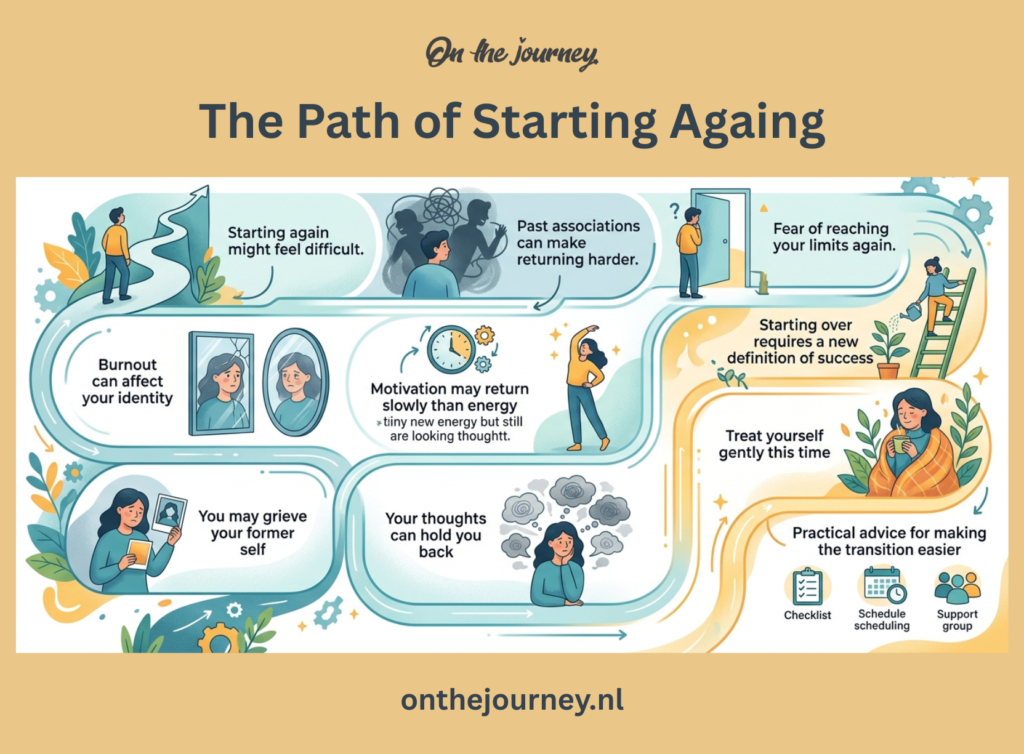
Starting again might feel difficult
Burnout can deplete your energy, and people may expect to feel like themselves again as soon as their energy begins to return. However, even after physical recovery starts, they may still feel hesitant, fearful, emotionally flat, and unsure of where to begin.
Past unpleasant associations would make the situation worse
There may be a strong association between work, responsibility, pressure, and a sense of danger. Even after someone has physically recovered, work-related situations may still trigger anxiety because the nervous system can remain sensitive to the stress and overload experienced during burnout.
Fear of pushing the limits again
Your priorities may change after burnout, and your health may become your highest priority. Before burnout, you might have been able to push through tiredness without giving it much thought. After burnout, however, every sign of fatigue can raise questions such as: Is this becoming too much again? Could I burn out again? You may even begin to hesitate before taking on ordinary tasks because you are afraid of pushing yourself too far.
Your identity would be effected by the burnout
People who are prone to burnout are often highly productive, reliable, ambitious, helpful, and capable. However, a tendency to sacrifice their own wellbeing and place work or other responsibilities ahead of their health can contribute to burnout. After going through such an intense and painful experience, their attitudes and priorities may begin to change. They may ask themselves: Who am I if I no longer want to live the way I did before?
Your motivations would be effected by the burnout
Physical recovery and psychological motivation do not always progress at the same pace. Someone may have enough energy to return to work while still feeling disconnected from their ambition, goals, or enthusiasm.
You may be grieving your former self
Burnout can involve a profound sense of loss, including the loss of health, time, career opportunities, status, or even a familiar sense of identity. The person you once believed yourself to be may no longer feel the same, and starting again can mean accepting that some things have changed. Rather than returning to exactly who you were before, recovery may involve learning how to move forward as a different version of yourself.
Your thoughts can hold you back from starting again
Dysfunctional thought patterns, such as perfectionism, can contribute to burnout. Constantly worrying about whether something is good enough can consume a significant amount of mental energy. After burnout, people may compare their current abilities with their pre-burnout performance or focus heavily on past failures and negative experiences. However, recovery usually requires taking smaller, more manageable steps: one task, one boundary, and one responsibility at a time. Moving forward may also mean creating a fresh chapter rather than constantly measuring yourself against the past.
Starting over requires a different definition of success
You need to adapt to the new version of yourself before starting over. Who you were before may no longer fully reflect who you are now. Recovery can create an opportunity to develop healthier ways of working and thinking, where rest, boundaries, relationships, and physical wellbeing matter more than constant achievement.
This time treat yourself gently
Burnout can be a bitter-tasting medicine. It can teach you a great deal about what truly matters, while encouraging you to adopt healthier habits and learn to respect your limits. It is important to rebuild routines gradually, recognize early warning signs, schedule regular recovery time, and practise saying no when necessary. Reconnecting with meaningful activities can also help you regain a sense of purpose, enjoyment, and balance in your life.
Set healthy boundaries
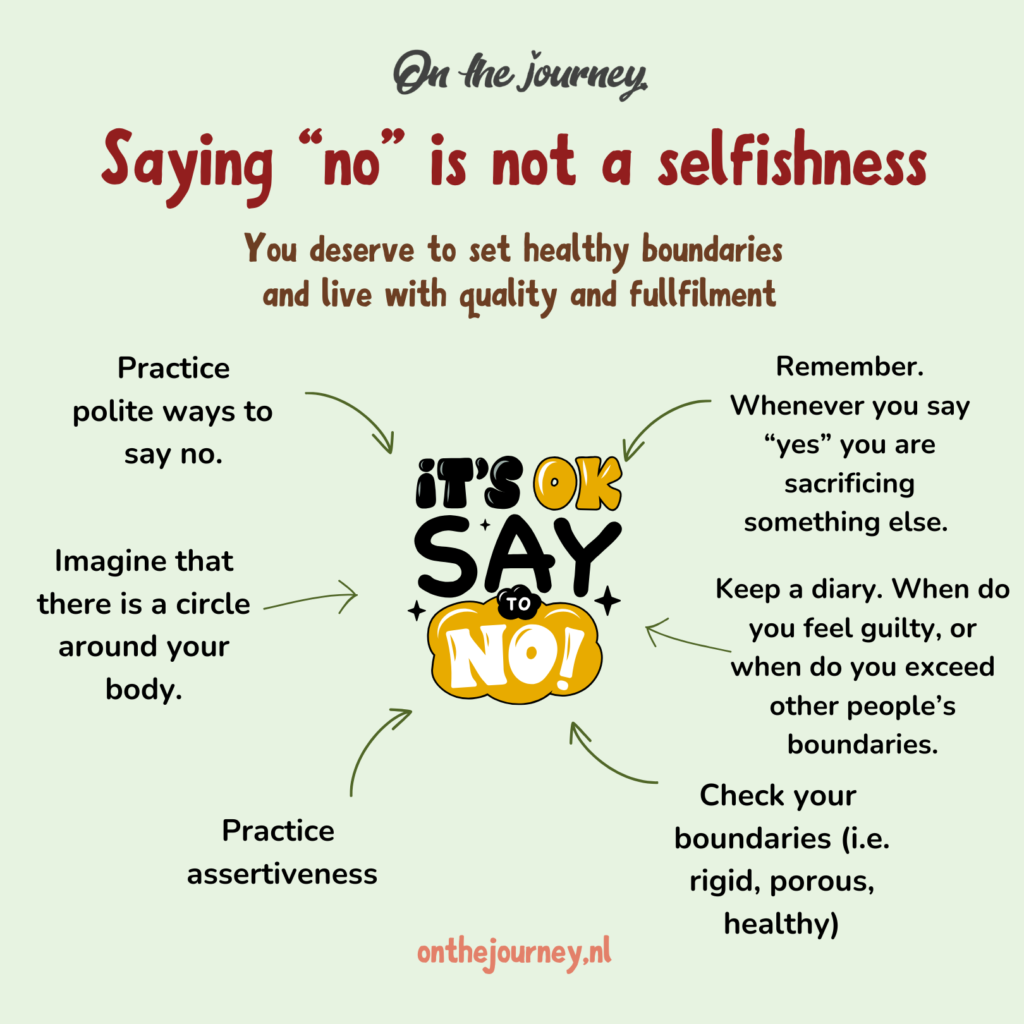
Setting healthy boundaries is an important part of rebuilding a balanced life after burnout. Boundaries help protect your time, energy, and wellbeing by making it clearer what you can realistically take on and when you need to say no. This may involve limiting overtime, avoiding the habit of always being available, communicating your needs more openly, and allowing yourself to rest without feeling guilty. Healthy boundaries do not mean withdrawing from responsibilities; rather, they help you stay engaged without constantly exceeding your limits. Learning to recognize when something is becoming too demanding and responding early can help prevent old patterns of overcommitment from returning and make recovery more sustainable.
Work on codependency
Codependency may also influence a person’s relationship with work. For instance, someone with codependent tendencies may seek excessive approval or reassurance from their manager, struggle to set boundaries, take on more responsibility than they can realistically manage, or feel uncomfortable disappointing colleagues. Over time, this can affect their workflow, increase stress, and contribute to overwork or burnout.
My Experience With Starting Over
Starting again after burnout can feel like a genuine fresh start, one that is different from simply returning to who you used to be. You may become someone who respects their limits and gradually moves beyond the hesitation, fear, and loss of momentum that can come with starting over. This can be a meaningful achievement. You learn to appreciate what you have, recognize your nervous system’s natural attempts to protect you from returning to the conditions that exhausted you, and develop a healthier relationship with responsibility. True recovery often involves letting go of old definitions of success and choosing a way of living that respects your mental and physical wellbeing.
You may begin to honor stronger boundaries, redefine your identity beyond titles, status, and productivity, and take small, intentional steps back into everyday life. Over time, you can create a rhythm that feels both fulfilling and sustainable. This healthier version of yourself does not need to be constantly productive or ambitious to have value. Be patient with the process, treat yourself gently, and remember that protecting your peace and wellbeing can be an important measure of progress.
Here are some practical ways to recover after burnout
- Make a habit of using a to-do list, but avoid making it too complicated.
- Return to your previous responsibilities gradually, adding one commitment at a time.
- Set small, realistic goals that you can complete without overwhelming yourself.
- Start by asking yourself, Why do I need to do this? Before investing your time and energy, consider whether the task is truly worth your attention.
- Build regular breaks and recovery time into your routine. This can help you maintain a healthier balance.
- Avoid comparing yourself with either your previous self or other people.
- Gradually reconnect with work, your social life, hobbies, and exercise.
- Say no to unnecessary demands and responsibilities.
- Allow yourself some flexibility. A difficult day should not feel like a failure.
- It is okay to be less productive from time to time. A manageable level of consistency is more helpful than constantly pushing yourself too hard. You also need time to recover.
- Develop greater insight into your own tendencies, particularly the patterns that may have contributed to your burnout.
- Remain flexible and remember that protecting your wellbeing should be your highest priority.
- Pay attention to your symptoms. If they remain severe, worsen, or significantly interfere with your daily functioning, consider discussing them with a doctor or mental health professional.
Conclusion
Starting again after burnout can feel like a genuine fresh start, one that may be very different from the life you had before. You may become someone who respects their limits more carefully and learns to move through the hesitation, fear, and loss of momentum that can come with starting over. This can be an important part of recovery. Rather than trying to return to the same patterns that contributed to burnout, you can begin to understand your nervous system’s protective response to situations that once exhausted you. True recovery often requires letting go of old definitions of success and choosing a way of living that respects both your mental and physical wellbeing.
You may begin to set firmer boundaries and redefine your identity beyond your title, status, or productivity. By taking small and intentional steps, you can gradually reconnect with life and create a rhythm that feels both fulfilling and sustainable. This new version of yourself can be more focused on health, balance, and self-respect. Be patient with the process and treat yourself gently. Protecting your peace and wellbeing can become one of the most meaningful measures of progress.