

Burnout does not occur suddenly. It often develops quietly, as you gradually begin working longer hours, taking on more responsibilities, sleeping less, and convincing yourself that you simply need to pull yourself together and keep going. In the beginning, exhaustion may start to feel normal. However, when stress continues for too long without sufficient recovery, the body and mind may eventually begin to signal that something is no longer working as it should.
Our culture often celebrates productivity, ambition, and constant achievement. However, there can come a point when dedication turns into depletion. Burnout does not only affect how we feel about work; it can drain our energy, impair concentration and sleep, strain relationships, affect physical wellbeing, and reduce our ability to enjoy everyday life. It is more than simply feeling tired after a demanding week. Burnout is a deeper state of physical, mental, and emotional exhaustion that can gradually affect many areas of life.
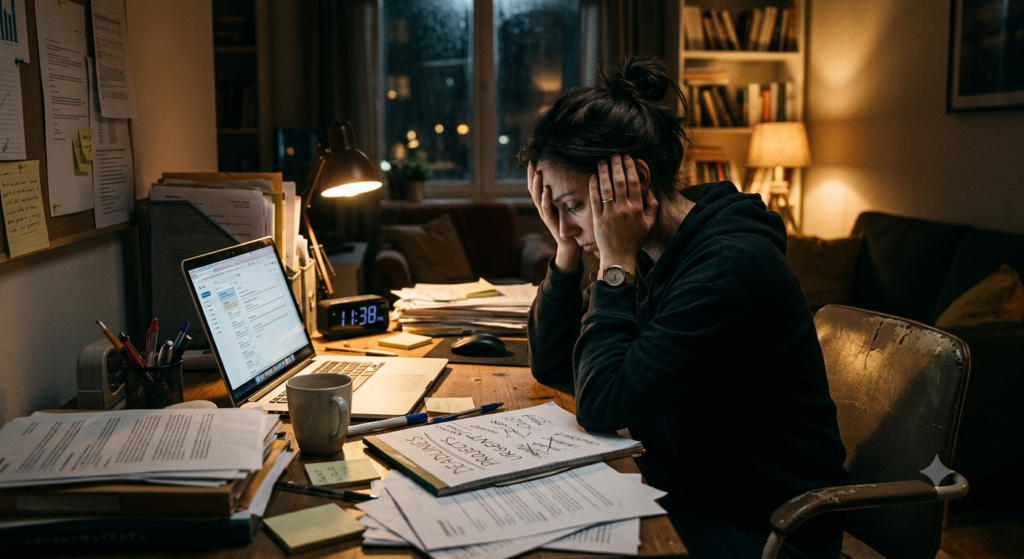
When burnout begins to affect the body, it is important to acknowledge it rather than deny or ignore it. Both external pressures and internal patterns can push us beyond our limits. Understanding burnout means paying attention to these pressures and recognising the signs before they become overwhelming. In this article, I explore what burnout is, how it develops, the signs to look out for, how it can affect the body and daily life, how it is assessed, what recovery may involve, and some of the lessons I learned through my own experience with severe burnout.
Burnout: When Stress Becomes More Than Ordinary Tiredness
Stress and tiredness are normal when life becomes demanding. People may feel exhausted after long hours of meetings, a difficult deadline, or several nights of poor sleep. In these situations, rest usually helps us recover.
Burnout is different. A person may reach a point where persistent exhaustion does not improve sufficiently with sleep, weekends, or a short period of rest. This is why it is important to pay attention when tiredness becomes ongoing and starts to affect everyday functioning.
According to the World Health Organization, burnout is a syndrome associated with chronic workplace stress that has not been successfully managed. Its central features include exhaustion, increased mental distance or negativity toward one’s job, and reduced professional effectiveness.
Burnout usually develops gradually rather than appearing overnight. It is more likely to develop when demands remain high for a prolonged period while opportunities for control, support, and recovery are too limited. See World Health Organisation’s article to learn more about burnout.
Main Signs of Burnout
• Persistent physical and mental exhaustion
• Emotional distance, cynicism, or detachment from work
• Reduced motivation and effectiveness
• Difficulty concentrating, remembering, or making decisions
• Irritability and increased sensitivity to noise or pressure
• Sleep problems and an inability to feel properly rested
• Difficulty recovering, even after weekends or time away
Over time, ordinary responsibilities may begin to feel overwhelming. Work performance can decline, relationships may become strained, and activities such as cooking, exercising, socialising, or caring for yourself may require far more energy than before.
What Causes Burnout
Workplace factors can include excessive workload and continuous effort, limited or negative feedback, micromanagement, unclear expectations, insufficient recognition or support, interpersonal conflict, low psychological safety or control, and too little time for recovery.
Personal patterns may also reinforce burnout. These can include perfectionism, difficulty saying no, taking on too much responsibility, struggling to set healthy limits around work, basing self-worth on productivity, and overlooking early warning signs.
Burnout is not a personal fault or weakness. It often develops through an interaction between working conditions, personal circumstances, coping patterns, and prolonged insufficient recovery.
Symptoms of Burnout
Long-term stress may be accompanied by physical symptoms such as:
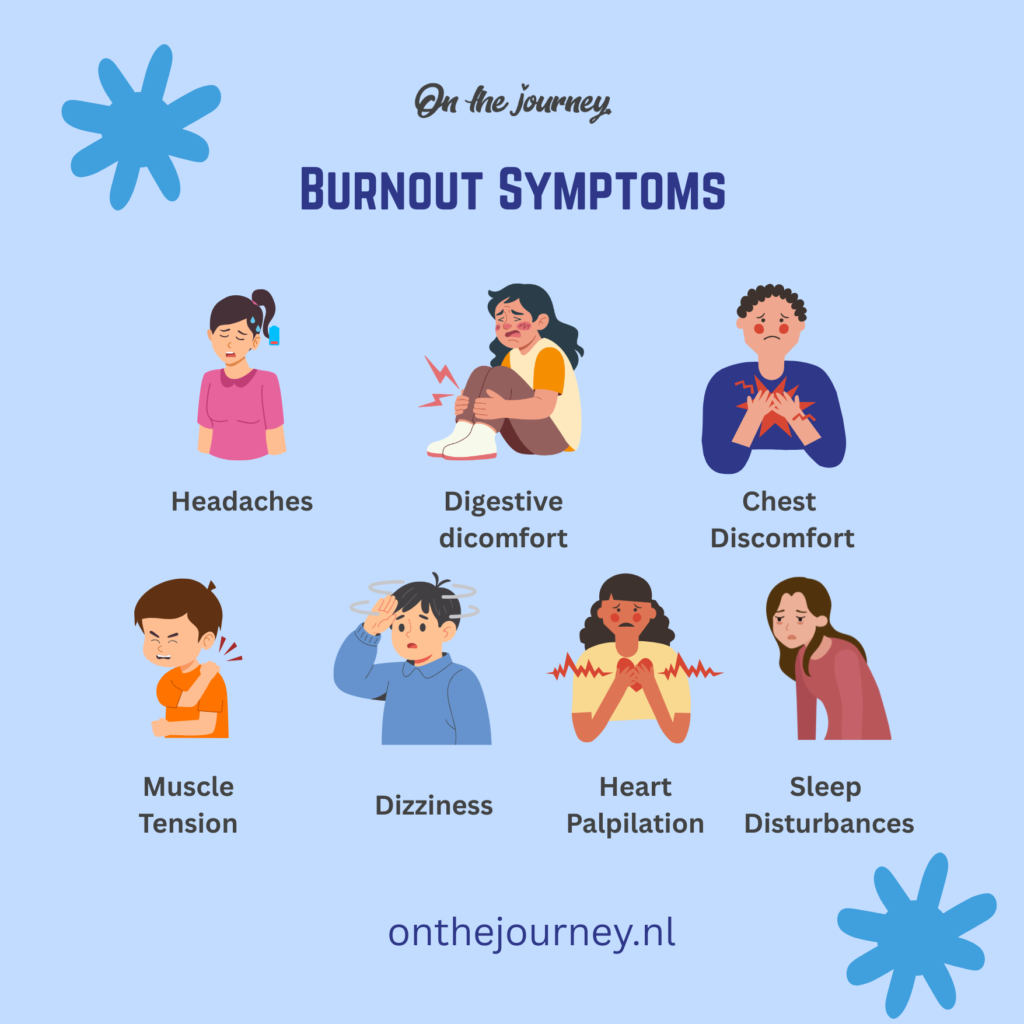
These symptoms are real and deserve attention.
However, symptoms such as blurred vision, fainting, significant weakness, chest pain, neurological symptoms, or major changes in bodily functioning should not automatically be explained as burnout. They should be medically assessed, particularly when they are new, severe, persistent, or worsening.
Further Assessment of Burnout
Burnout cannot be understood through one symptom or one questionnaire alone. Assessment may involve conversations about:
• How the symptoms began and developed
• Their duration and severity
• Workplace conditions and recent life events
• Sleep, recovery, and daily routines
• The ability to work and complete everyday activities
• Emotional and physical functioning
• Personal coping styles and available support
Validated questionnaires can support this process, but they should be interpreted within the person’s broader situation. A professional may also consider whether depression, anxiety, sleep disorders, medication side effects, thyroid problems, anaemia, nutritional deficiencies, or another medical condition could be contributing to the symptoms.
Burnout Assessment Tools
A creative burnout assessment scale is a reflective tool that combines common burnout indicators with engaging, real-life questions about energy, motivation, emotional exhaustion, concentration, recovery, and connection to work. Rather than focusing only on numerical scores, it can invite individuals to describe their experience through metaphors, visual scales, daily-life scenarios, or prompts such as, “How full is your inner battery?”
This approach may make reflection on burnout feel more accessible and personal while helping identify patterns that deserve further attention. However, a creative scale should be used as a supportive screening tool and not as a replacement for a validated questionnaire or professional assessment.
A Word version of the burnout inventory can be provided alongside this section for readers who would like to complete it separately.
Burnout Recovery Methods
Recovery is rarely achieved through rest alone. It may require:
• Reducing or restructuring the workload
• Creating space for physical and mental recovery
• Setting clearer boundaries
• Establishing consistent sleep and daily routines
• Receiving psychological or practical support
• Addressing workplace conflict or uncertainty
• Reintroducing activities gradually
• Learning to recognise early warning signs
• Developing a more sustainable relationship with achievement and responsibility
Recovery is often gradual and non-linear. A person may feel stronger one week and exhausted again the next. A difficult day does not necessarily mean that all progress has been lost. The time needed for recovery varies depending on the individual situation.
Strategies for Coping with Burnout
Recovery becomes more manageable when broad changes are translated into small, practical steps. The following strategies can support that process:
Reduce workload where possible: temporarily lower demands, postpone non-essential tasks, delegate, and discuss adjustments at work.
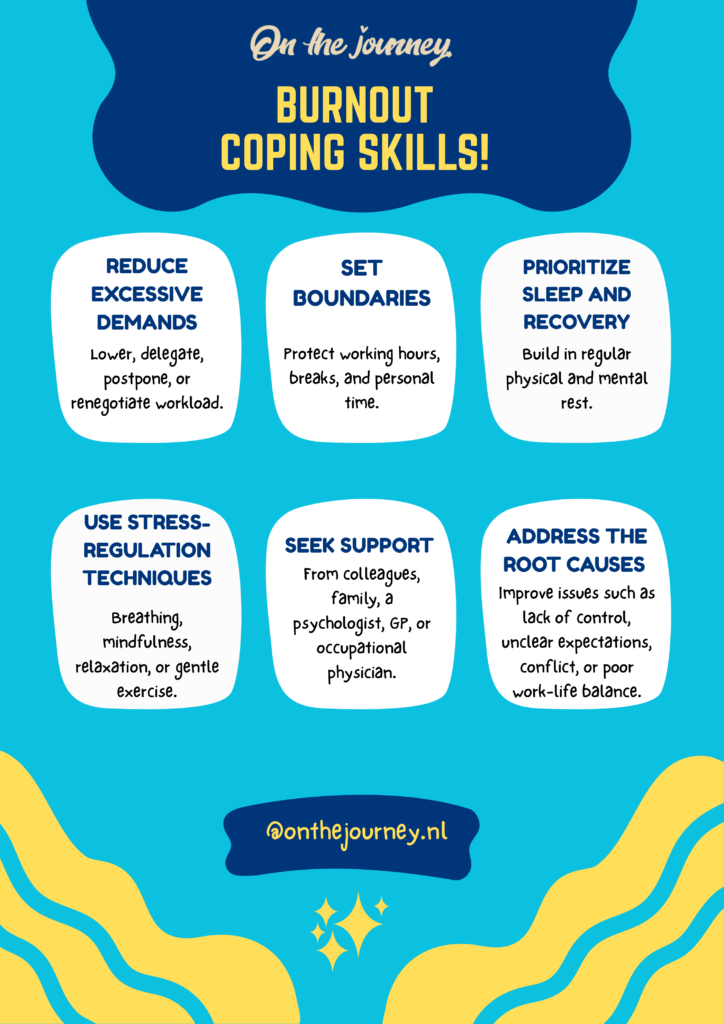
Set clearer boundaries: define working hours, take breaks, avoid checking work constantly, and practise saying no to unrealistic demands.
Prioritise recovery: protect sleep, create genuine downtime, and schedule periods where you are not expected to be productive.
Use pacing: alternate demanding activities with lighter ones instead of pushing until exhaustion and then crashing.
Practise relaxation techniques: slow breathing, progressive muscle relaxation, mindfulness, meditation, or gentle yoga can help reduce physiological arousal.
Move regularly: walking, cycling, stretching, or moderate exercise can support mood and stress regulation, while excessive exercise may be unhelpful when you are already exhausted.
Challenge perfectionism: replace “I must do everything perfectly” with more realistic standards such as “good enough is appropriate here.”
Identify controllable stressors: separate what you can change from what you cannot, then focus your energy on concrete changes.
Stay socially connected: talk with supportive friends, family, colleagues, or professionals rather than withdrawing completely.
Use problem-solving: identify the specific problem, brainstorm solutions, choose one manageable action, and review whether it helped.
Seek professional support: a psychologist, GP, occupational physician, or workplace counsellor can help assess symptoms and develop a recovery plan.
In the Netherlands, the huisarts can help assess both physical and psychological symptoms. A POH-GGZ may provide initial psychological support, while a psychologist can help address stress patterns, perfectionism, boundaries, anxiety, and behavioural changes. When work is involved, a bedrijfsarts can advise on workload adjustments, temporary limitations, workplace accommodations, and a gradual return to work. Thuisarts website provide more information about burnout, prevention and copinn
Here is an article related to the topic:
My Experience with Burnout
I experienced a very intense period of burnout that eventually reached a point where both my body and mind felt completely out of balance. As difficult as that experience was, it taught me some of the most valuable lessons about what truly matters in life. When we begin to base our self-worth on work, achievement, productivity, or the approval of others, it becomes easy to lose perspective. We work harder, take on more responsibility, struggle to say no, and become increasingly focused on pleasing others. Without healthy boundaries and enough time to recover, things can gradually get out of control.
Burnout taught me that our body, health, and wellbeing are incredibly precious. No job, promotion, amount of money, recognition, or professional success can truly compensate for losing our physical and emotional wellbeing. Happiness is not about constantly pushing ourselves to the limit to prove that we are valuable. Our worth does not need to be earned through exhaustion. A meaningful life also means slowing down, enjoying ordinary moments, nurturing relationships, protecting our health, and allowing ourselves to rest without guilt.
Perhaps the most important lesson I learned was the meaning of “good enough.” Not everything has to be perfect, exceptional, or impressive. There is great value in recognising when we have worked enough, achieved enough, and given enough, while learning to appreciate what we already have. Today, I see success differently. True success is not only about what we accomplish, but also about whether we can remain healthy, peaceful, connected, and present while living our lives.
Burnout is not laziness, incompetence, or weakness. It is a sign that demands have exceeded a person’s capacity and opportunities for recovery for too long.
You do not need to wait until you can no longer function before asking for help. Early support may prevent prolonged exhaustion and make it easier to create lasting changes.
Your health should not have to collapse before it becomes a priority.
Conclusion
Burnout is not a personal failure, a sign of weakness, or simply an inability to handle stress. It can develop when chronic demands continuously exceed a person’s capacity and opportunities for recovery. Because the physical, mental, and emotional toll often builds gradually, recognising early warning signs and taking practical steps to protect wellbeing is important.
Recovery requires time, realistic adjustments, clearer boundaries, and often professional support. Healing is rarely linear, but sustainable routines, appropriate workplace changes, and patience can help restore health, rebuild energy, and regain a sense of balance. You do not have to reach total exhaustion before prioritising yourself. Taking action early can support a more sustainable recovery.