
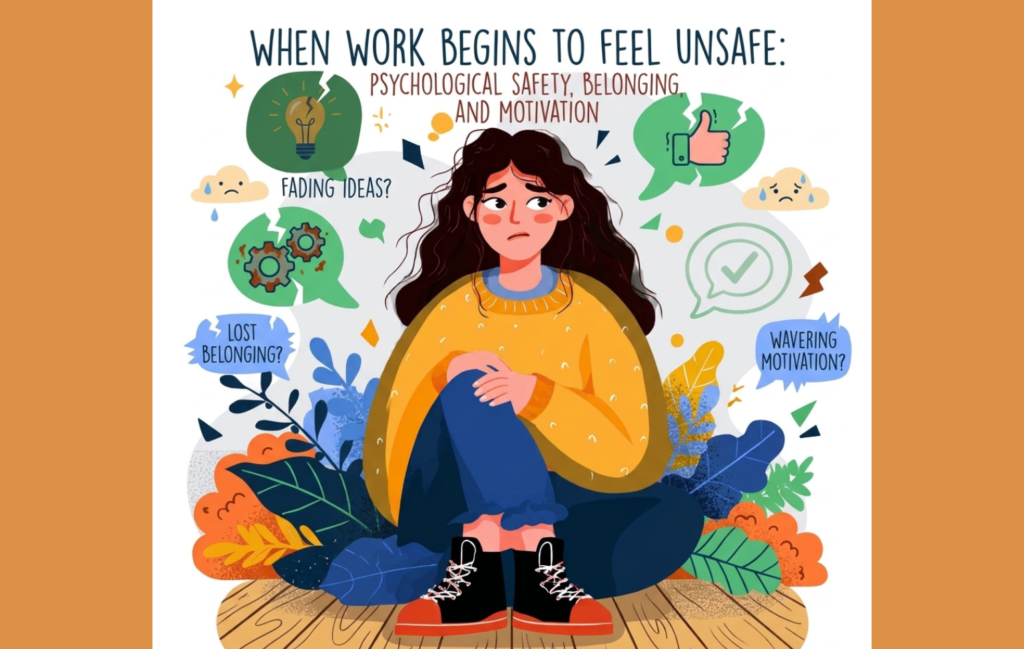
A Case Study in Organisational Psychology
Work is more than a place where individuals carry out their professional responsibilities safely and satisfied. Workplace dynamics play an important role in shaping employees’ sense of belonging, motivation, and psychological well-being. In this article, we explore how psychological processes influence motivation and workplace interactions.
The workplace is also a social environment in which individuals evaluate themselves, interpret others’ reactions, and develop beliefs about their competence, identity, and sense of belonging. The environment is felt mentally foreign which conflicts with the feeling of safety.
Employees’ experiences are shaped not only by organisational conditions but also by internal psychological processes. Personal beliefs, emotional sensitivity, previous experiences, and expectations of social acceptance can influence how individuals perceive and respond to their working environments.
These individual and organisational factors continuously interact, sometimes contributing to declining confidence, emotional withdrawal, reduced motivation, and, over time, burnout.
The following fictional case study illustrates how such difficulties may gradually develop.
Emma’s Story
Emma (fictional character), an expat who lives in the Netherlands for 2 years. She was enthusiastic about her responsibilities and she is interested in learning and motivated to contribute meaningfully at work. However she has an anxious personality and it is not easy for her to get the feelings of safety particularly in a country that she is feeling safe.
Emma frequently questioned her professional competence frequently. Given the fact that she is new to the work culture, her feedback could trigger prolonged doubts about her abilities. Emma depended heavily on how colleague’s and managers evaluated her performance and her insecurities became noticeable during meetings.
Individual factors: Personal beliefs, emotional sensitivity, sensitivity to rejection, and responses to stress can influence how employees interpret professional interactions.
Interpersonal factors: Communication styles, interruptions, feedback practices, and responses to disagreement can influence employees’ willingness to participate and express themselves.
Organisational factors: Leadership practices, team norms, performance expectations, and organisational culture shape the broader conditions in which employees work.
From an organizational psychology perspective, it is important to examine how individual characteristics, workplace conditions, and psychological safety interact to shape employees’ experiences, rather than considering these factors in isolation.
Communication Difficulties Under Pressure
Emma sometimes needed additional time to organise her thoughts and explain complex ideas. When colleagues interrupted her or challenged her statements before she had finished speaking, she found it increasingly difficult to communicate effectively.
She was particularly sensitive to interpersonal cues, including tone of voice, facial expressions, and the emotional intensity of conversations. Even when her colleagues did not intend to undermine her, she sometimes perceived certain interactions as threatening.
As her anxiety increased, Emma became preoccupied with how others might react to her contributions. Competing thoughts and constant self-evaluation made it difficult to concentrate on discussions.
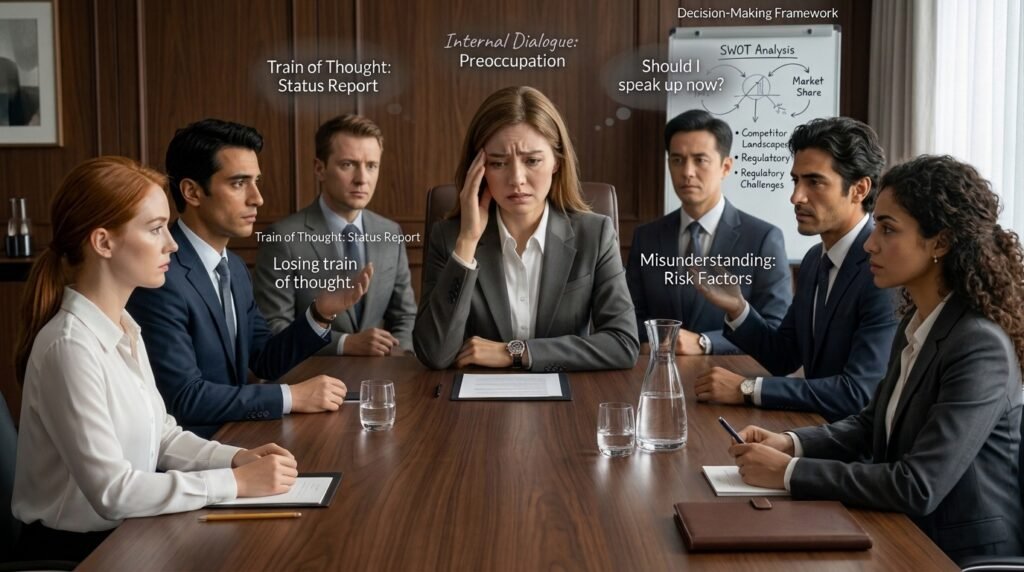
The more pressure she experienced, the harder communication became. Eventually, she began contributing less frequently, even when she had valuable ideas. She hesitated the unwelcomed reaction from the manager which would probably shake her self-confidence.
The Growing Feeling of Not Belonging
Over time, Emma’s insecurity extended beyond meetings and developed into a persistent pattern of overthinking. Her excessive focus on her internal thoughts and emotional experiences gradually weakened her psychological connection to her work.
Throughout the working day, she experienced a persistent sense of emotional heaviness and an increasing desire to distance herself psychologically from the workplace. Although she continued to fulfil her professional responsibilities, she felt increasingly disconnected from her colleagues.
Each working day became more emotionally burdensome, and what had once been a source of motivation gradually became a source of distress. Her sense of psychological safety at work began to diminish, further intensifying her emotional discomfort and insecurity. These overwhelming emotions began to overshadow her other feelings, leaving little room for enthusiasm, satisfaction, or a sense of professional fulfilment.
Beneath this experience was a recurring belief:
“Perhaps I am not good enough to belong here.”
Emma began interpreting ordinary interactions through this assumption. Disagreement could feel like evidence of incompetence, while an interruption or unexpected question could trigger further self-doubt.
She came to believe that belonging depended on becoming more competent, articulate, confident, and emotionally resilient. This created a painful contradiction: she wanted to feel accepted, yet her fear of negative evaluation made her increasingly reluctant to participate. The more that she exposed to this kind of behavior, the more a form of trauma accumulated like a snowball. Emma was also experiencing serious somatic symptoms and this made extra frustration on her. She was easily reacting when she felt offensiveness and threat.
From Withdrawal to Burnout
As stressful experiences accumulated, Emma began anticipating uncomfortable interactions and hesitating to attend work and meetings. Her declining sense of psychological safety increased her emotional distress and exhaustion. These experiences may indicate early signs of burnout, a consequence of prolonged, unmanaged workplace stress characterised by exhaustion, psychological withdrawal, and reduced professional efficacy. See the link below to read more about burnout.
Sometimes, encountering a colleague associated with earlier difficult meetings was enough to produce apprehension. Her motivation declined. Work that once inspired curiosity and enthusiasm became associated with emotional pressure. Outside work, she repeatedly revisited conversations, questioned her responses, and imagined how she could have behaved differently.
Eventually, her withdrawal extended beyond the workplace. She reduced social contact and spent increasing amounts of time at home, seeking distance from emotionally demanding situations.
Her experience culminated in severe occupational burnout, emotional exhaustion, and a profound loss of enthusiasm for work. Although no single factor can explain this progression, Emma’s experience raises an important question:
How can personal vulnerabilities and workplace conditions interact to transform a meaningful professional experience into a source of psychological distress?
The psychology behind professional self-worth
Several interconnected psychological processes may help explain Emma’s experience.
Rejection and Professional Self-Worth
Rejection refers to the tendency to anxiously anticipate, perceive, and react strongly to possible social rejection. Also experiencing it plays an important role in assessment of self-worth.
Individuals with heightened rejection sensitivity may interpret ambiguous interactions as signs of disapproval or exclusion. Her insecurities rise and the feeling of safety is vanished For Emma, disagreement could feel like a judgment of her competence, while hesitation during a discussion could reinforce her belief that she was less capable than her colleagues.
The important question is how the individual vulnerabilities interact with the social environment and how to take preventive actions before it leads to something catastrophic.
Stress and Cognitive Performance
When individuals perceive social evaluation as threatening, psychological and physiological stress responses may increase. They are triggered regularly which forces them to think more negatively, and get more alert during the day.
Elevated stress can interfere with working memory, attention, and the ability to organise information. This helps explain why someone who communicates effectively in a relaxed environment may struggle to express ideas under interpersonal pressure.
Emma’s anticipation of criticism occupied cognitive resources that could otherwise have supported concentration and communication Her difficulties may therefore have reflected emotional pressure and cognitive overload rather than insufficient professional competence.
Conditioned Stress Responses
Repeated stressful experiences can cause particular people, environments, or situations to become associated with emotional discomfort. That might eventually lead to burnout when there is too much force.
Through conditioned stress responses, previously neutral situations may begin triggering anticipatory anxiety. For Emma, meetings and certain professional interactions gradually became associated with possible criticism or embarrassment.
Consequently, even ordinary workplace encounters could feel emotionally demanding.
Rumination and Avoidance
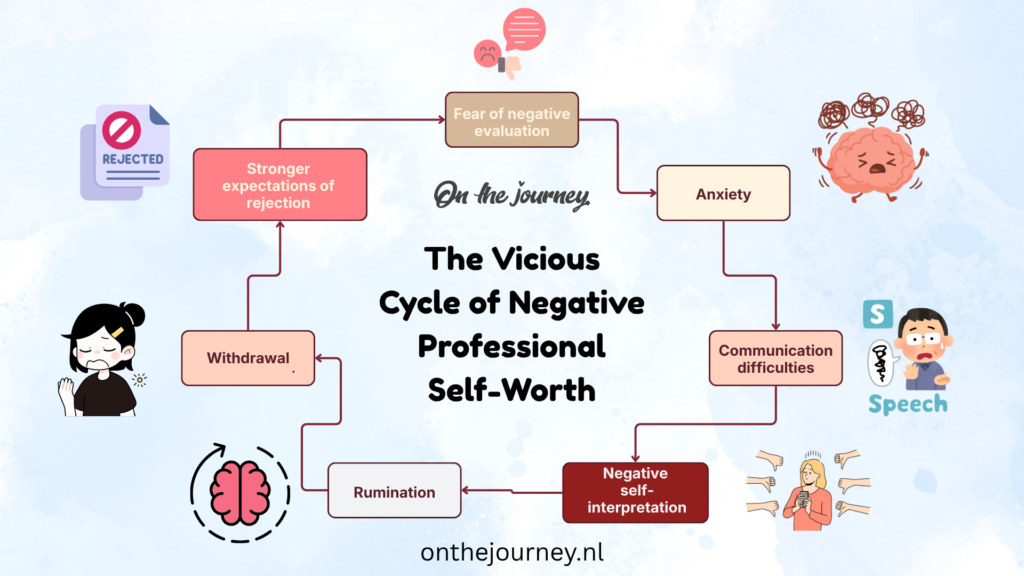
Emma frequently revisited difficult conversations, analysed her behaviour, and questioned how colleagues had interpreted her words. This resembles post-event rumination, a pattern of repetitive thinking that can prolong distress and reinforce negative expectations.
She also began avoiding situations in which she might feel evaluated.
Although withdrawal provided temporary relief, it reduced opportunities for positive interactions and corrective experiences.
Over time, this cycle may have intensified Emma’s insecurity and emotional exhaustion.
An Inspection to the case from Organisational Psychology
Emma’s experience cannot be understood through individual psychological processes alone. Organisational conditions also influence how employees experience work.
Two theoretical perspectives are particularly relevant: Psychological safety and self-determination theory.
Psychological safety refers to a shared belief that a team is safe for interpersonal risk-taking (Edmondson, 1999). In psychologically safe teams, employees can ask questions, express uncertainty, share ideas, and acknowledge mistakes without expecting humiliation or punishment. Psychological safety does not mean avoiding disagreement or criticism. Rather, it concerns how individuals are treated when expressing themselves.
For Emma, speaking during meetings had become associated with potential embarrassment and negative evaluation. She increasingly monitored her speech, hesitated before contributing, and sometimes remained silent. When she came home she analysed her behavior over and over and this burned her out more than the work itself.
However, an individual’s experience of psychological insecurity does not automatically mean that an entire team lacks psychological safety. Psychological safety is a shared team-level belief, while Emma’s apprehension reflects her individual experience.
Her difficulties may have emerged through the interaction of personal sensitivity, earlier stressful experiences, and workplace communication practices. Nevertheless, respectful communication, constructive feedback, and inclusive participation may help reduce unnecessary interpersonal pressure.
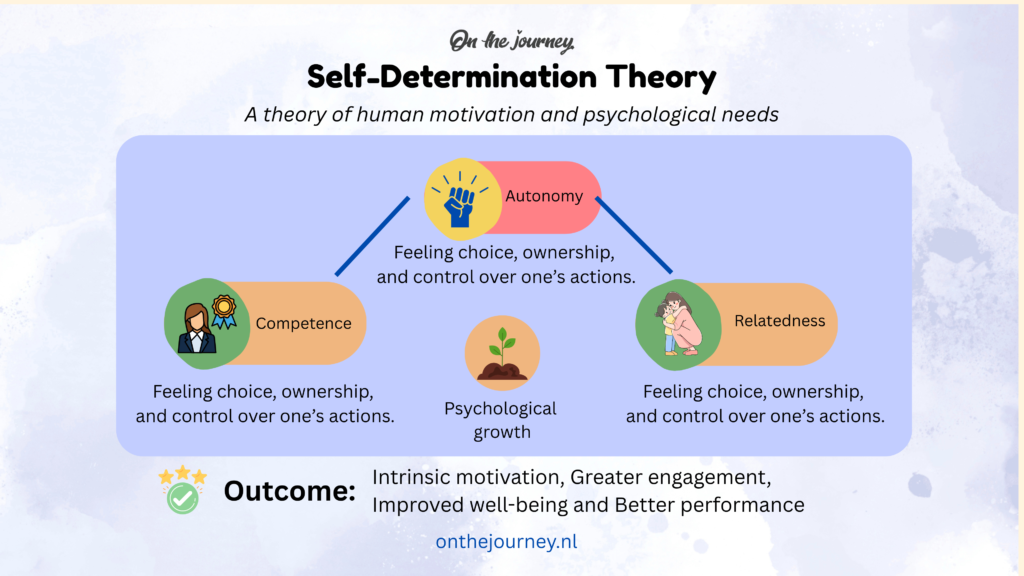
Self-Determination Theory is also another psychological theory that influenced the situation (Deci & Ryan, 2000).
According to this theory, three basic psychological needs support motivation and well-being:
- Autonomy: Feeling a sense of choice and agency.
- Competence: Feeling capable and effective.
- Relatedness: Feeling connected to and valued by others.
Although all three needs are important, competence and relatedness appear particularly relevant to Emma.
Competence: Emma increasingly interpreted communication difficulties as evidence of professional inadequacy. Her perceived competence declined, even though her knowledge and abilities had not necessarily changed.
Relatedness: Emma struggled to feel accepted within her professional group. Her belief that she did not deserve to belong contributed to emotional distance and withdrawal.
As these psychological needs became frustrated, the meaning of work changed. Activities that had once provided opportunities for learning and achievement became associated with avoiding mistakes and negative evaluation.
Emma’s motivation did not disappear suddenly. It gradually weakened as work became connected with apprehension rather than personal growth.
What does the research in Organisational Psyhology Suggest
Research highlights the relationship between workplace experiences, psychological needs, and employee functioning.
In a longitudinal study involving 699 nurses, Trépanier, Fernet, and Austin (2015) examined workplace bullying, psychological need satisfaction, and employee functioning over twelve months.
Their findings indicated that workplace bullying predicted poorer psychological need satisfaction and higher subsequent burnout. Psychological need satisfaction was also associated with stronger work engagement over time.
Although Emma’s case does not establish that bullying occurred, this research illustrates how adverse workplace experiences may influence motivation and well-being.
Employee motivation develops within a social and organisational context, not solely through individual characteristics.
How to support employees like Emma?
Understanding these processes creates opportunities for support at different levels.
Individual Support
Emma may have benefited from examining the beliefs underlying her professional insecurity. At the same time, a psychologically safe work environment could have helped her feel more comfortable expressing herself, making mistakes, and participating in workplace interactions without fear of negative judgement.
Learning to distinguish actual performance difficulties from negative self-interpretations could have reduced her dependence on external reassurance. Strategies for managing anticipatory anxiety, reducing rumination, and responding more flexibly to criticism might also have supported her confidence.
The objective would not be to eliminate emotional sensitivity but to develop healthier ways of responding to challenging experiences.
Interpersonal Support
Constructive communication practices could have reduced unnecessary pressure.
Allowing colleagues sufficient time to explain ideas, providing specific feedback, and distinguishing disagreement from personal criticism can support participation. Importantly, hesitation or communication difficulties should not automatically be interpreted as a lack of knowledge or competence.
Organisational Support
Leadership is a skill and it is really important to have the skills of empathy and healthy boundaries in the same time. Leaders can encourage inclusive participation, respectful disagreement, and constructive responses to mistakes. If a worker is struggling with some kind of hesitation, negativity, offensiveness, it is a good idea to direct to HR or Organisational Psychologist. However all this should be done in a very friendly way, the employee should not be felt as being pushed to be outsided from the colleagues or managers.
Organisations may also benefit from reconsidering how professional competence is evaluated. Immediate verbal confidence and emotional composure are not always reliable indicators of knowledge, creativity, or performance.
Recognising different communication styles and psychological needs may support both employee well-being and team effectiveness. In cases involving severe burnout, organisational adjustments and appropriate professional support may also be necessary.
Conclusion and Take Home Messages
Emma’s story illustrates how workplace difficulties can emerge through the interaction of personal vulnerability, interpersonal experiences, and organisational conditions. The place is not aligned with standarts of safety.
An employee may be knowledgeable, motivated, and committed while simultaneously struggling with insecurity, anxiety, and a declining sense of belonging. What appears externally as disengagement or reduced participation may reflect an internal struggle involving fear of evaluation, emotional self-protection, and unmet psychological needs.
This does not mean that every experience of workplace insecurity indicates an unhealthy organisation, nor that personal vulnerabilities should be ignored.
Instead, it highlights the importance of understanding the relationship between the individual and the working environment.
Employees should not have to feel perfectly confident, emotionally unaffected, or consistently articulate to experience belonging at work.
Professional growth involves uncertainty, mistakes, learning, and vulnerability.
Workplaces that acknowledge these realities may be better positioned to support confidence, engagement, and psychological well-being. Ultimately, Emma’s experience invites us to ask:
How can organisations promote safety where employees feel sufficiently secure to contribute, develop, and remain connected to their work, even when they are still learning to believe in themselves?
References
Deci, E. L., & Ryan, R. M. (2000). The “what” and “why” of goal pursuits: Human needs and the self-determination of behavior. Psychological Inquiry, 11(4), 227–268.
Edmondson, A. (1999). Psychological safety and learning behavior in work teams. Administrative Science Quarterly, 44(2), 350–383.
Author’s note: Emma is a fictional illustrative case based on some real anecdotes. The psychological interpretations are theoretical possibilities, not a clinical assessment or established explanations of an actual individual’s behaviour.