Jessie is around 40 and he have been working in the industry for 20 years, his routines are settled and there is no information or task in his current job that excites you anymore. This is a data-backed phenomenon that research carried out by Indeed shows that 40% of full-time workers already made a dramatic career shift and the remaining 65% are actively considering a new field like Jessie. Therefore the scientific studies support the phenomenon that it is not unusual for people to prefer such career shift around 40.
There could be many reasons for your desire to “start over.” It could be that your industry has been disrupted or that you are being pulled toward a long-neglected passion. While the psychological weight of starting over is the biggest hurdle, scientific studies offer a different perspective: a transition at 40 is not a restart; it is a strategic move for a new professional world full of excitement.
You’re ready for a career change but unsure where to begin. This article walks you through each step, helping you navigate the transition in a way that’s both smooth and sustainable.
“Your second act begins the moment you decide you deserve a life that truly excites you.”
If you want a career shift because of intense burnout, the first step is to focus on recovery. Burnout clouds your judgment, drains your energy, and can make any path forward feel overwhelming. Before making major decisions, give yourself the space to rest, restore your mental and physical well-being, and regain clarity. Once you feel more balanced, you’ll be in a much stronger position to evaluate your options and choose a direction that truly supports your long-term health and fulfillment. Here is an article that could guide you in this process.
A close person I knew had issues with setting boundaries, which influenced all aspects of her life, particularly her work. She was responsible for multiple managers, and her people-pleasing personality made her life difficult in many ways. Outside of work, dealing with difficult personalities created an intense burden in her life that pushed her to search for answers to existential questions. It turned out that her job was not right for her at all. This experience pushed her to the edge, and she stopped accomplishing any tasks for a very long time. Self-knowledge is very important for a happy and fulfilled life.
Adapt your mindset for the career shift
Mindsets can often become a barrier to leaving the past behind and stepping into a new chapter of your life. Letting go is rarely easy, especially when you’ve invested significant time, energy, or resources into a particular path. This is where the sunk cost fallacy comes into play where a psychological trap that keeps us committed simply because of what we’ve already invested. As humans, we naturally dislike waste, but this instinct can mislead us into confusing past costs with future potential.
Sunk costs are already spent and cannot be recovered, so they shouldn’t determine your next steps. Yet this common thinking error often leads people to stay in unfulfilling jobs, projects, or relationships longer than they should. When you shift your focus from justifying past investments to choosing what will serve you best moving forward, it becomes easier to let go of what no longer works.
Leaving the past behind is an important part of creating a more fulfilling future. Instead of escaping a job you dislike, focus on moving toward a life that genuinely resonates with you. Discover what excites you and pursue it with intention. As you begin a new career path, expect to step outside your comfort zone—growth often requires learning new skills and embracing uncertainty. What matters most is your willingness to put in the effort to learn, adapt, and develop along the way. Here is an article that would help with recovering from workplace environment.
“Every natural beauty which ever was can be exceeded by the beauty of a late afternoon.”
— C.S. Lewis
How to Start a Career Shift
Explore possible careers: Make a search for possible career tracks and profitable industries, and consider those that match your skills. AI-related jobs are trending today due to their innovative nature. You could become a product manager, prompt engineer, or cybersecurity analyst. Data analysis is another popular field with strong long-term potential.
Medical and health services are seeing significant investment. Cybersecurity, logistics, sustainability, and health tech are also quite profitable sectors.
Understand your passion: First of all, it is important to understand why you want a career shift. List all your reasons on paper.
- Are you bored or burned out?
- Do you want more purpose in your life?
- Do you need a better work-life balance or higher income?
- Do you want to use different strengths?
For example: I want to become a career coach.
List all your skills: Getting insight into your available skills is essential for a career shift. The second step is to list all your skills. There are usually two types of skills included in a CV: soft skills and hard skills.
Soft skills relate to how you work, communicate, and collaborate with others. They include social and behavioral abilities such as communication, teamwork, problem-solving, adaptability, leadership, time management, emotional intelligence, creativity, and conflict resolution. Here is an assessment to measure your skills.
Hard skills are specific, teachable, and measurable abilities that you can learn through education, training, and hands-on experience. They are usually demonstrated through certificates, tests, portfolios, and practical work.
Examples of hard skills include computer and technical skills such as Microsoft Office, email management systems, data analysis, industry-specific expertise, and marketing.
Create a personal brand:Determine your values and list them in an elevator pitch. Clearly explain what your expertise is. Update your CV and résumé, and prepare your talking points for interviews. Make them visible to facilitate your career shift.
Start Networking: There are great online sources for networking, you can connect with experts via Linkedin and join all the events at Meetup for meeting experts and exchanging knowledge.
While doing your preparation, make sure that it is meaningful and reflect on one concept at a time. Furthermore connect it to a system that you already understand. When you are starting a new skill, allow yourself to be “terrible” for a week because stress block down your neuroplasticity. Furthermore open curiosity. Practice actively, don’t just read but also close the book and summarise your learnings from memory and teach it to someone else. Also maybe matching your learning with previous ones can also motivate you to proceed further.
The Advantage of Career Shift at a Later Age
Forty can be a more suitable age than twenty for a career shift, partly due to well-developed self-awareness. By the time you reach 40, you have two decades of experience and a well-established personality. You understand your talents better because you’ve seen them tested in high-pressure environments.
By the age of 40, you have two decades of insight into your own personality. You understand your talents better than a recent graduate because you have seen them tested in high-pressure environments. You can finally choose a path based on evidence rather than societal expectations.
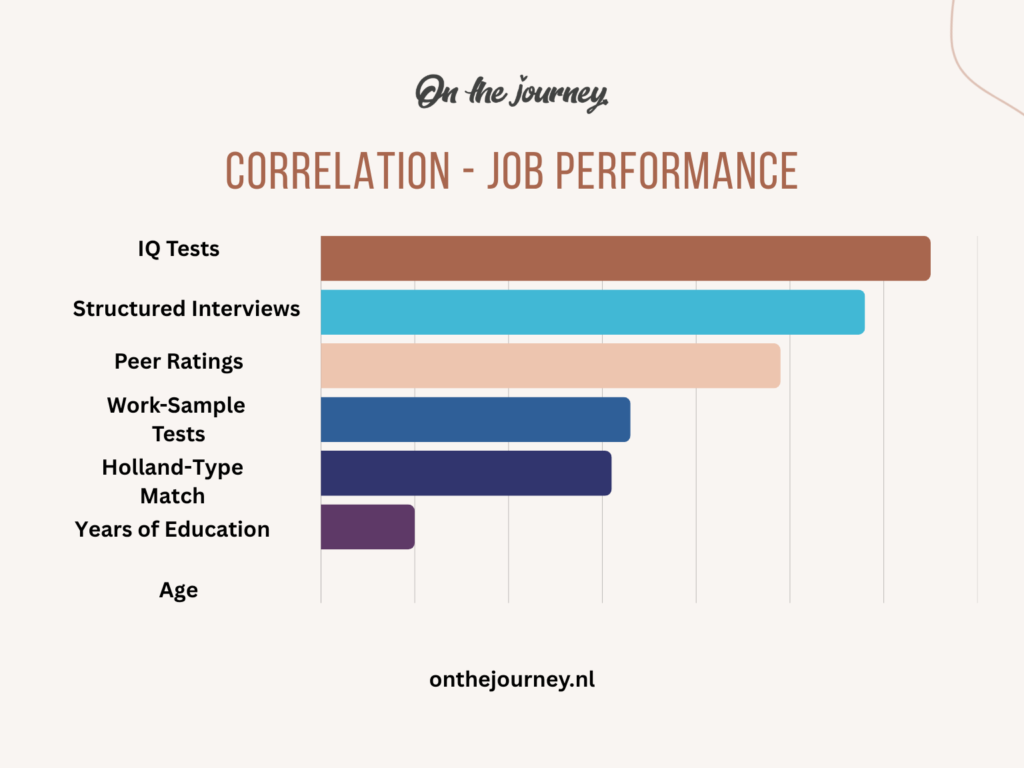
The 2016 working paper The validity and utility of selection methods in personnel psychology: Practical and theoretical implications of 100 years of research findings analyzes a century of research on how well different hiring methods predict job performance. It shows that matching a person’s interests to a job (Holland-type match) has a relatively low correlation of 0.31 with actual performance. In comparison, stronger predictors include IQ tests (0.65) and interviews (0.58). An interesting finding in this study was age had zero correlation with job performance.
Cognitive Depth: Research shows that while younger brains may excel in raw processing speed, older brains tend to prioritize meaning and systems thinking. This is your “slow down to learn deeply” advantage—a concept we will explore further in the habits section below for career shift.
Accumulated Experience: Learning is most effective when new knowledge is “anchored” to existing context. At 40, your brain is like a vast library. You don’t just learn new technical skills; you connect them to decades of leadership, conflict resolution, and industry experience.
Famous People Having Career Shift at Late Age
Vera Wang: Vera Wang is an American designer known for her modern and elegant bridal gowns. She began her career in fashion as an editor at Vogue before transitioning into design.
Grandma Moses: Grandma Moses began her painting career at 76 and became famous for her nostalgic and lively depictions of rural life. She started painting seriously in her late 70s. Over time, she became a cultural icon and a worldwide inspiration. Her art style is known as American folk art, characterized by its nostalgic and storytelling quality.
Alan Rickman: Alan Rickman was an English actor known for his rich, velvety voice and his remarkable ability to portray complex dramatic roles. He worked across both film and stage, earning admiration from audiences and fellow actors alike.
Julia Child: Julia Child was an American chef and television personality who introduced French cooking to mainstream American audiences. She was known for her humor and approachable teaching style, and she helped transform how Americans think about cooking.
Conclusion
A midlife career shift is not merely a restart, but a strategic evolution shaped by decades of personal and professional experience. By the age of 40, individuals often possess a unique ability to “slow down to learn deeply,” anchoring new technical skills to a vast foundation of experience, including leadership and conflict resolution. This cognitive depth allows for decisions based on evidence and self-clarity rather than societal expectations.
There are well-known figures who began their careers later in life, such as Vera Wang and Alan Rickman. By exploring modern, high-growth industries like AI or health tech and actively building professional networks, individuals can navigate this transition more effectively. The advantage of midlife lies in the perspective and adaptability it offers, making it possible to move forward with intention. It is never too late to align your career with your true passion.